Transforming a traditional house into a net-zero home is one of the most rewarding investments a property owner can make. In simple terms, a net-zero home produces as much clean energy as it consumes over the course of a single year. Achieving this balance requires far more than just bolting a few solar panels onto a roof and hoping for the best. It calls for a systematic, whole-home approach that treats every building system as an interconnected component of a larger machine.
When property owners embark on this journey, they quickly discover that true energy efficiency is about balance. Reducing the overall energy load of the structure must always happen before installing renewable generation hardware. If a house leaks conditioned air through an uninsulated attic or relies on outdated mechanical equipment, any clean power generated will be wasted right away. By analyzing how heat moves through walls, how electricity powers daily routines, and how thermal comfort is maintained, homeowners can build a clear roadmap toward zero net energy consumption.
A crucial early step involves sizing power generation to match actual household consumption patterns. Integrating a modern residential solar system allows a building to offset its grid consumption during peak hours and store excess energy in battery banks for later use. However, setting up generation capacity is only half the battle. The household must also ensure that power-hungry equipment and climate systems run as efficiently as possible.
Upgrading heating and cooling infrastructure plays a central role here, as space conditioning usually accounts for more than half of a residential building’s total energy budget. Scheduling a full furnace-repair’>HVAC installation with high-efficiency equipment drastically slashes basic kilowatt-hour demands. This reduction makes it much easier for clean energy systems to handle the entire household energy load year-round. Taking time to establish a comprehensive strategy from day one prevents costly mistakes, avoids oversized equipment, and ensures that every contractor involved works toward a unified efficiency goal.
Furthermore, a proper plan considers future energy needs, such as adding electric vehicles or expanded family living spaces. Anticipating growth prevents premature upgrades down the road and keeps installation costs manageable over time.
Fortifying the Outer Shell and Roof Dynamics

Before adding high-tech energy equipment, the physical envelope of the house must be thoroughly evaluated and improved. The roof, exterior walls, windows, and foundation form the primary defense against heat gain in the summer and heat loss in the winter. If the building shell is weak or poorly insulated, mechanical systems have to work twice as hard to maintain comfortable indoor temperatures.
The roof deserves special attention during a net-zero overhaul because it bears the full brunt of extreme weather conditions and carries heavy structural loads. Bringing in a qualified roofer to inspect the decking, rafter support, and underlayment ensures the structure can handle decades of weather exposure and added equipment weight. Addressing minor structural deficiencies or hidden leaks early on prevents disastrous repairs after complex equipment is mounted on top of the shingles.
Attic ventilation is another critical factor that directly influences overall building performance and seasonal energy use. Poorly ventilated attics trap extreme heat during summer months, radiating thermal energy down into living spaces and forcing cooling equipment to run continuously. Installing an advanced wind vented roof system helps equalize attic pressure and flush out trapped heat naturally through wind-driven vacuum forces. This passive ventilation technique lowers surface temperatures across the entire upper structure without drawing a single watt of electricity from the grid.
In addition to thermal control, comprehensive air sealing must be performed across all top plates, recessed light fixtures, and plumbing penetrations entering the attic space. Dense insulation, such as blown cellulose or closed-cell spray foam, should be applied to achieve high thermal resistance values. When the roof structure is sound, properly vented, and tightly insulated, the overall heating and cooling demands of the building drop dramatically. This thermal stability protects internal components, creates a baseline for zero-energy performance, and ensures that the structural foundation is prepared for long-term operational success.
By treating the roof and attic space as a single thermal shield, property owners reduce indoor temperature swings significantly. This stability relieves stress on mechanical equipment and keeps interior rooms comfortable throughout extreme summer heatwaves and winter freezes.
Upgrading the Electrical Infrastructure for Modern Demands
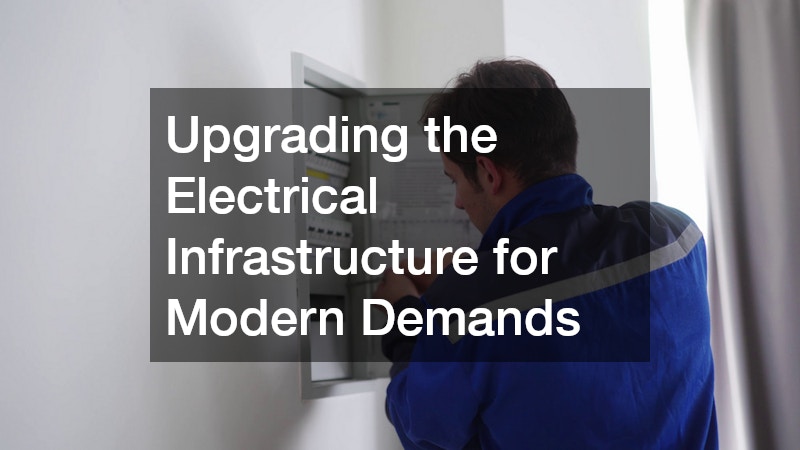
A successful net-zero transition fundamentally changes how a house consumes, converts, and manages electricity. Older residences were typically designed for modest electrical loads, often equipped with 100-amp panels that simply cannot support modern electrification goals. Transitioning away from fossil fuels means adding heavy electrical demands, including electric vehicle chargers, heat pumps, induction cooktops, and battery backup units.
Upgrading the main service panel to a 200-amp or 400-amp configuration is almost always necessary to handle these increased loads safely. Engaging licensed electricians ensures that load calculations are performed according to local building codes and safety standards. These professionals can also install smart subpanels that give homeowners real-time visibility into their power consumption. Smart panelboards allow users to prioritize essential circuits during power outages and automate load shedding so high-draw systems do not overpower the main utility connection.
Beyond main service upgrades, internal branch circuits must be audited for efficiency and safety. Legacy wiring, loose connections, and ungrounded outlets increase electrical resistance, causing hidden power losses, voltage drops, and potential fire hazards throughout the structure. Dedicated high-voltage lines must be routed for modern kitchen equipment, electric water heating systems, and specialized outdoor machinery. Proper circuit distribution prevents power surges and guarantees steady, reliable performance across all electronic devices without tripping main breakers.
Everyday appliances also contribute significantly to the baseline power draw of a home, often consuming energy even when turned off. Seeking professional appliance service can help identify phantom loads, miscalibrated thermostats, or worn internal components in major household machines. Repairing or replacing inefficient motors, worn door seals, and aging control boards helps reduce unnecessary background power consumption. By optimizing every electrical branch and eliminating hidden energy leaks, the entire electrical system operates at peak reliability, establishing a solid foundation for clean energy integration.
Smart power monitoring tools offer another layer of protection by alerting homeowners to unusual energy spikes in real time. Catching minor electrical glitches or failing components early prevents costly equipment damage and keeps overall household energy consumption predictable month after month. Modern monitoring hardware links directly to mobile devices, giving property owners full control over their home’s electrical health from anywhere.
Reimagining Heating and Cooling Mechanics
Because heating and cooling represent the single largest slice of residential energy consumption, transforming thermal systems is essential for achieving net-zero performance. Traditional combustion heating systems rely on burning natural gas, propane, or fuel oil, which inherently produces carbon emissions and wastes energy through exhaust flues. Eliminating these fossil-fuel dependencies requires shifting to advanced electric heat pump technology.
Ground-source heat pumps represent one of the most efficient thermal management choices available to modern homeowners today. Investing in a geothermal installation allows homeowners to leverage the constant temperature of the earth several feet below the surface. Because underground temperatures remain steady around 50 to 55 degrees Fahrenheit year-round, ground-source systems require far less energy to heat a home in winter or cool it in summer compared to traditional air-source equipment. This consistency results in dramatic energy savings during extreme weather conditions.
Conversely, keeping an old, inefficient furnace in service creates a massive operational bottleneck that prevents a home from reaching true net-zero performance. Older units frequently suffer from cracked heat exchangers, leaky duct connections, and inefficient blower motors that consume excessive electricity. Replacing legacy combustion units with ultra-efficient multi-stage electric heat pumps or hybrid thermal systems ensures that every unit of electricity consumed yields maximum heating output.
Proper duct design and airflow management are equally critical when upgrading thermal systems. Air ducts running through unconditioned attics or crawlspaces must be sealed with mastic duct sealant and insulated to prevent thermal losses. Variable-speed blowers should be calibrated to maintain precise humidity control and even temperatures across every room. When space conditioning equipment is properly sized through detailed Manual J calculations, the system operates smoothly, avoids short-cycling, and consumes only a fraction of the energy required by legacy equipment.
High-efficiency filtration systems integrated into ductwork also improve indoor air quality while protecting sensitive internal mechanical components from heavy dust accumulation. Clean internal components maintain optimal heat transfer rates, ensuring the heat pump maintains its rated efficiency through years of continuous operation without wasting power or overworking the system compressor.
Managing Water Systems and Preventing Efficiency Loss
Water heating is typically the second-largest energy expense in a residential building, following closely behind space heating and cooling. Standard tank-style electric water heaters operate continuously to maintain hot water, leading to substantial standby heat loss throughout the day. In a net-zero retrofit, water heating mechanics must be updated to minimize standby losses and lower total gallon-per-minute demands.
Partnering with a skilled local plumber is essential when converting to high-efficiency water heating technologies, such as hybrid heat pump water heaters. These units pull ambient heat from the surrounding air to heat water, using up to 70 percent less electricity than standard resistance water heaters. The plumber can also install low-flow fixtures, heat recovery drain systems, and insulated hot water pipes to ensure that hot water reaches taps quickly without thermal loss along the pipe run.
Long-term energy performance also hinges on proactive maintenance across all mechanical systems in the home. Neglecting routine checkups leads to component degradation, clogged filters, dirty coils, and restricted airflow. These mechanical issues force electric motors to work much harder and draw significantly more power than necessary, eroding the efficiency gains achieved during the initial retrofit.
For instance, staying on top of seasonal AC repairs prevents small refrigerant leaks or dirty evaporator coils from turning into major power drain issues. Clean coils and correct refrigerant charges ensure that cooling equipment operates at its rated seasonal energy efficiency ratio. Regularly replacing air filters, flushing water heater tanks to eliminate sediment build-up, and checking system operating pressures keeps every utility system functioning at maximum efficiency. This ongoing attention to mechanical health prevents efficiency degradation and guarantees that the property maintains its net-zero balance for decades to come.
Regular maintenance inspections also give homeowners complete peace of mind by preventing sudden mechanical breakdowns during peak seasonal usage. A well-maintained home operates quietly, efficiently, and reliably, protecting the owner’s investment while maintaining low utility expenses throughout every season. Setting up a recurring inspection schedule keeps mechanical systems performing like new for years.
Executing a Strategic Multi-Trade Retrofit Plan
Achieving net-zero performance is a comprehensive journey that requires careful planning, trade coordination, and realistic project scheduling. Because every building system influences the performance of others, homeowners must avoid treating upgrades as isolated, piecemeal projects. Installing massive power generation systems before reducing building energy loads often leads to oversized, overly expensive equipment that operates inefficiently over its lifespan.
A successful execution strategy starts with a comprehensive whole-home energy audit. Blower door tests, thermal imaging scans, and duct leakage assessments provide clear data on where energy is being lost. With this information in hand, property owners can sequence their retrofits logically: sealing the building envelope first, upgrading mechanical and electrical infrastructure second, and sizing clean energy generation last.
Working with experienced trade professionals who understand whole-home building science is key to smooth project execution. Coordinating schedules between contractors ensures that electrical service panels are upgraded before heat pumps are installed, and roof structures are reinforced before generation equipment is mounted. Clear communication across trades eliminates unnecessary rework, reduces project delays, and keeps overall construction costs under control.
Financial planning is another essential component of a successful net-zero blueprint. Property owners should take full advantage of available federal tax credits, state energy rebates, and local utility incentives designed to offset the upfront costs of energy retrofits. Many programs offer substantial savings for panel upgrades, high-efficiency heat pumps, insulation improvements, and clean energy hardware. By combining strategic trade coordination, thorough building science, and available financial incentives, homeowners can successfully transform any standard residence into a resilient, ultra-efficient, net-zero power producer for the future.
Ultimately, investing in a complete net-zero retrofit enhances daily living comfort, increases long-term property market value, and eliminates vulnerability to rising energy prices. Taking a deliberate, phased approach ensures that every dollar spent contributes directly to a healthier, more sustainable home environment for generations to come.
Transforming a traditional house into a net-zero home is one of the most rewarding investments a property owner can make. In simple terms, a net-zero home produces as much clean energy as it consumes over the course of a single year. Achieving this balance requires far more than just bolting a few solar panels onto a roof and hoping for the best. It calls for a systematic, whole-home approach that treats every building system as an interconnected component of a larger machine.
When property owners embark on this journey, they quickly discover that true energy efficiency is about balance. Reducing the overall energy load of the structure must always happen before installing renewable generation hardware. If a house leaks conditioned air through an uninsulated attic or relies on outdated mechanical equipment, any clean power generated will be wasted right away. By analyzing how heat moves through walls, how electricity powers daily routines, and how thermal comfort is maintained, homeowners can build a clear roadmap toward zero net energy consumption.
A crucial early step involves sizing power generation to match actual household consumption patterns. Integrating a modern residential solar system allows a building to offset its grid consumption during peak hours and store excess energy in battery banks for later use. However, setting up generation capacity is only half the battle. The household must also ensure that power-hungry equipment and climate systems run as efficiently as possible.
Upgrading heating and cooling infrastructure plays a central role here, as space conditioning usually accounts for more than half of a residential building’s total energy budget. Scheduling a full furnace-repair’>HVAC installation with high-efficiency equipment drastically slashes basic kilowatt-hour demands. This reduction makes it much easier for clean energy systems to handle the entire household energy load year-round. Taking time to establish a comprehensive strategy from day one prevents costly mistakes, avoids oversized equipment, and ensures that every contractor involved works toward a unified efficiency goal.
Furthermore, a proper plan considers future energy needs, such as adding electric vehicles or expanded family living spaces. Anticipating growth prevents premature upgrades down the road and keeps installation costs manageable over time.
Fortifying the Outer Shell and Roof Dynamics
Before adding high-tech energy equipment, the physical envelope of the house must be thoroughly evaluated and improved. The roof, exterior walls, windows, and foundation form the primary defense against heat gain in the summer and heat loss in the winter. If the building shell is weak or poorly insulated, mechanical systems have to work twice as hard to maintain comfortable indoor temperatures.
The roof deserves special attention during a net-zero overhaul because it bears the full brunt of extreme weather conditions and carries heavy structural loads. Bringing in a qualified roofer to inspect the decking, rafter support, and underlayment ensures the structure can handle decades of weather exposure and added equipment weight. Addressing minor structural deficiencies or hidden leaks early on prevents disastrous repairs after complex equipment is mounted on top of the shingles.
Attic ventilation is another critical factor that directly influences overall building performance and seasonal energy use. Poorly ventilated attics trap extreme heat during summer months, radiating thermal energy down into living spaces and forcing cooling equipment to run continuously. Installing an advanced wind vented roof system helps equalize attic pressure and flush out trapped heat naturally through wind-driven vacuum forces. This passive ventilation technique lowers surface temperatures across the entire upper structure without drawing a single watt of electricity from the grid.
In addition to thermal control, comprehensive air sealing must be performed across all top plates, recessed light fixtures, and plumbing penetrations entering the attic space. Dense insulation, such as blown cellulose or closed-cell spray foam, should be applied to achieve high thermal resistance values. When the roof structure is sound, properly vented, and tightly insulated, the overall heating and cooling demands of the building drop dramatically. This thermal stability protects internal components, creates a baseline for zero-energy performance, and ensures that the structural foundation is prepared for long-term operational success.
By treating the roof and attic space as a single thermal shield, property owners reduce indoor temperature swings significantly. This stability relieves stress on mechanical equipment and keeps interior rooms comfortable throughout extreme summer heatwaves and winter freezes.
Upgrading the Electrical Infrastructure for Modern Demands
A successful net-zero transition fundamentally changes how a house consumes, converts, and manages electricity. Older residences were typically designed for modest electrical loads, often equipped with 100-amp panels that simply cannot support modern electrification goals. Transitioning away from fossil fuels means adding heavy electrical demands, including electric vehicle chargers, heat pumps, induction cooktops, and battery backup units.
Upgrading the main service panel to a 200-amp or 400-amp configuration is almost always necessary to handle these increased loads safely. Engaging licensed electricians ensures that load calculations are performed according to local building codes and safety standards. These professionals can also install smart subpanels that give homeowners real-time visibility into their power consumption. Smart panelboards allow users to prioritize essential circuits during power outages and automate load shedding so high-draw systems do not overpower the main utility connection.
Beyond main service upgrades, internal branch circuits must be audited for efficiency and safety. Legacy wiring, loose connections, and ungrounded outlets increase electrical resistance, causing hidden power losses, voltage drops, and potential fire hazards throughout the structure. Dedicated high-voltage lines must be routed for modern kitchen equipment, electric water heating systems, and specialized outdoor machinery. Proper circuit distribution prevents power surges and guarantees steady, reliable performance across all electronic devices without tripping main breakers.
Everyday appliances also contribute significantly to the baseline power draw of a home, often consuming energy even when turned off. Seeking professional appliance service can help identify phantom loads, miscalibrated thermostats, or worn internal components in major household machines. Repairing or replacing inefficient motors, worn door seals, and aging control boards helps reduce unnecessary background power consumption. By optimizing every electrical branch and eliminating hidden energy leaks, the entire electrical system operates at peak reliability, establishing a solid foundation for clean energy integration.
Smart power monitoring tools offer another layer of protection by alerting homeowners to unusual energy spikes in real time. Catching minor electrical glitches or failing components early prevents costly equipment damage and keeps overall household energy consumption predictable month after month. Modern monitoring hardware links directly to mobile devices, giving property owners full control over their home’s electrical health from anywhere.
Reimagining Heating and Cooling Mechanics

Because heating and cooling represent the single largest slice of residential energy consumption, transforming thermal systems is essential for achieving net-zero performance. Traditional combustion heating systems rely on burning natural gas, propane, or fuel oil, which inherently produces carbon emissions and wastes energy through exhaust flues. Eliminating these fossil-fuel dependencies requires shifting to advanced electric heat pump technology.
Ground-source heat pumps represent one of the most efficient thermal management choices available to modern homeowners today. Investing in a geothermal installation allows homeowners to leverage the constant temperature of the earth several feet below the surface. Because underground temperatures remain steady around 50 to 55 degrees Fahrenheit year-round, ground-source systems require far less energy to heat a home in winter or cool it in summer compared to traditional air-source equipment. This consistency results in dramatic energy savings during extreme weather conditions.
Conversely, keeping an old, inefficient furnace in service creates a massive operational bottleneck that prevents a home from reaching true net-zero performance. Older units frequently suffer from cracked heat exchangers, leaky duct connections, and inefficient blower motors that consume excessive electricity. Replacing legacy combustion units with ultra-efficient multi-stage electric heat pumps or hybrid thermal systems ensures that every unit of electricity consumed yields maximum heating output.
Proper duct design and airflow management are equally critical when upgrading thermal systems. Air ducts running through unconditioned attics or crawlspaces must be sealed with mastic duct sealant and insulated to prevent thermal losses. Variable-speed blowers should be calibrated to maintain precise humidity control and even temperatures across every room. When space conditioning equipment is properly sized through detailed Manual J calculations, the system operates smoothly, avoids short-cycling, and consumes only a fraction of the energy required by legacy equipment.
High-efficiency filtration systems integrated into ductwork also improve indoor air quality while protecting sensitive internal mechanical components from heavy dust accumulation. Clean internal components maintain optimal heat transfer rates, ensuring the heat pump maintains its rated efficiency through years of continuous operation without wasting power or overworking the system compressor.
Managing Water Systems and Preventing Efficiency Loss

Water heating is typically the second-largest energy expense in a residential building, following closely behind space heating and cooling. Standard tank-style electric water heaters operate continuously to maintain hot water, leading to substantial standby heat loss throughout the day. In a net-zero retrofit, water heating mechanics must be updated to minimize standby losses and lower total gallon-per-minute demands.
Partnering with a skilled local plumber is essential when converting to high-efficiency water heating technologies, such as hybrid heat pump water heaters. These units pull ambient heat from the surrounding air to heat water, using up to 70 percent less electricity than standard resistance water heaters. The plumber can also install low-flow fixtures, heat recovery drain systems, and insulated hot water pipes to ensure that hot water reaches taps quickly without thermal loss along the pipe run.
Long-term energy performance also hinges on proactive maintenance across all mechanical systems in the home. Neglecting routine checkups leads to component degradation, clogged filters, dirty coils, and restricted airflow. These mechanical issues force electric motors to work much harder and draw significantly more power than necessary, eroding the efficiency gains achieved during the initial retrofit.
For instance, staying on top of seasonal AC repairs prevents small refrigerant leaks or dirty evaporator coils from turning into major power drain issues. Clean coils and correct refrigerant charges ensure that cooling equipment operates at its rated seasonal energy efficiency ratio. Regularly replacing air filters, flushing water heater tanks to eliminate sediment build-up, and checking system operating pressures keeps every utility system functioning at maximum efficiency. This ongoing attention to mechanical health prevents efficiency degradation and guarantees that the property maintains its net-zero balance for decades to come.
Regular maintenance inspections also give homeowners complete peace of mind by preventing sudden mechanical breakdowns during peak seasonal usage. A well-maintained home operates quietly, efficiently, and reliably, protecting the owner’s investment while maintaining low utility expenses throughout every season. Setting up a recurring inspection schedule keeps mechanical systems performing like new for years.
Executing a Strategic Multi-Trade Retrofit Plan
Achieving net-zero performance is a comprehensive journey that requires careful planning, trade coordination, and realistic project scheduling. Because every building system influences the performance of others, homeowners must avoid treating upgrades as isolated, piecemeal projects. Installing massive power generation systems before reducing building energy loads often leads to oversized, overly expensive equipment that operates inefficiently over its lifespan.
A successful execution strategy starts with a comprehensive whole-home energy audit. Blower door tests, thermal imaging scans, and duct leakage assessments provide clear data on where energy is being lost. With this information in hand, property owners can sequence their retrofits logically: sealing the building envelope first, upgrading mechanical and electrical infrastructure second, and sizing clean energy generation last.
Working with experienced trade professionals who understand whole-home building science is key to smooth project execution. Coordinating schedules between contractors ensures that electrical service panels are upgraded before heat pumps are installed, and roof structures are reinforced before generation equipment is mounted. Clear communication across trades eliminates unnecessary rework, reduces project delays, and keeps overall construction costs under control.
Financial planning is another essential component of a successful net-zero blueprint. Property owners should take full advantage of available federal tax credits, state energy rebates, and local utility incentives designed to offset the upfront costs of energy retrofits. Many programs offer substantial savings for panel upgrades, high-efficiency heat pumps, insulation improvements, and clean energy hardware. By combining strategic trade coordination, thorough building science, and available financial incentives, homeowners can successfully transform any standard residence into a resilient, ultra-efficient, net-zero power producer for the future.
Ultimately, investing in a complete net-zero retrofit enhances daily living comfort, increases long-term property market value, and eliminates vulnerability to rising energy prices. Taking a deliberate, phased approach ensures that every dollar spent contributes directly to a healthier, more sustainable home environment for generations to come.
Leave a Reply